Introducing the Dental Head Space
Supporting the People Behind the Dentistry
Dental practice can be demanding — mentally, physically and emotionally. The Dental Head Space offers practical, evidence-informed ways to manage pressure, support wellbeing and help the whole dental team feel more settled, resilient and in control.

About Me:
The psychological Demands of Dentistry
Dentistry places unusual demands on the clinician. It requires sustained concentration, fine motor control, rapid decision-making and the ability to manage patients who may be anxious, distressed or fearful — often within a tightly scheduled working day.
The psychological and physical effects of that workload are not always recognised. Stress may show itself through muscular tension, fatigue, irritability, reduced concentration, difficulty switching off after work or a gradual loss of confidence and enjoyment in clinical practice.
Supporting clinician wellbeing therefore involves more than encouraging people to “cope better”. It means understanding how attention, emotion, physiological arousal and the working environment interact — and developing practical ways to regulate them.
The Dental Head Space focuses on that neglected part of dental practice: how clinicians manage themselves while caring for others.
It provides practical, evidence-informed approaches to clinician self-regulation, occupational stress and the management of anxious patients, with the aim of helping dental professionals work with greater steadiness, confidence and control.
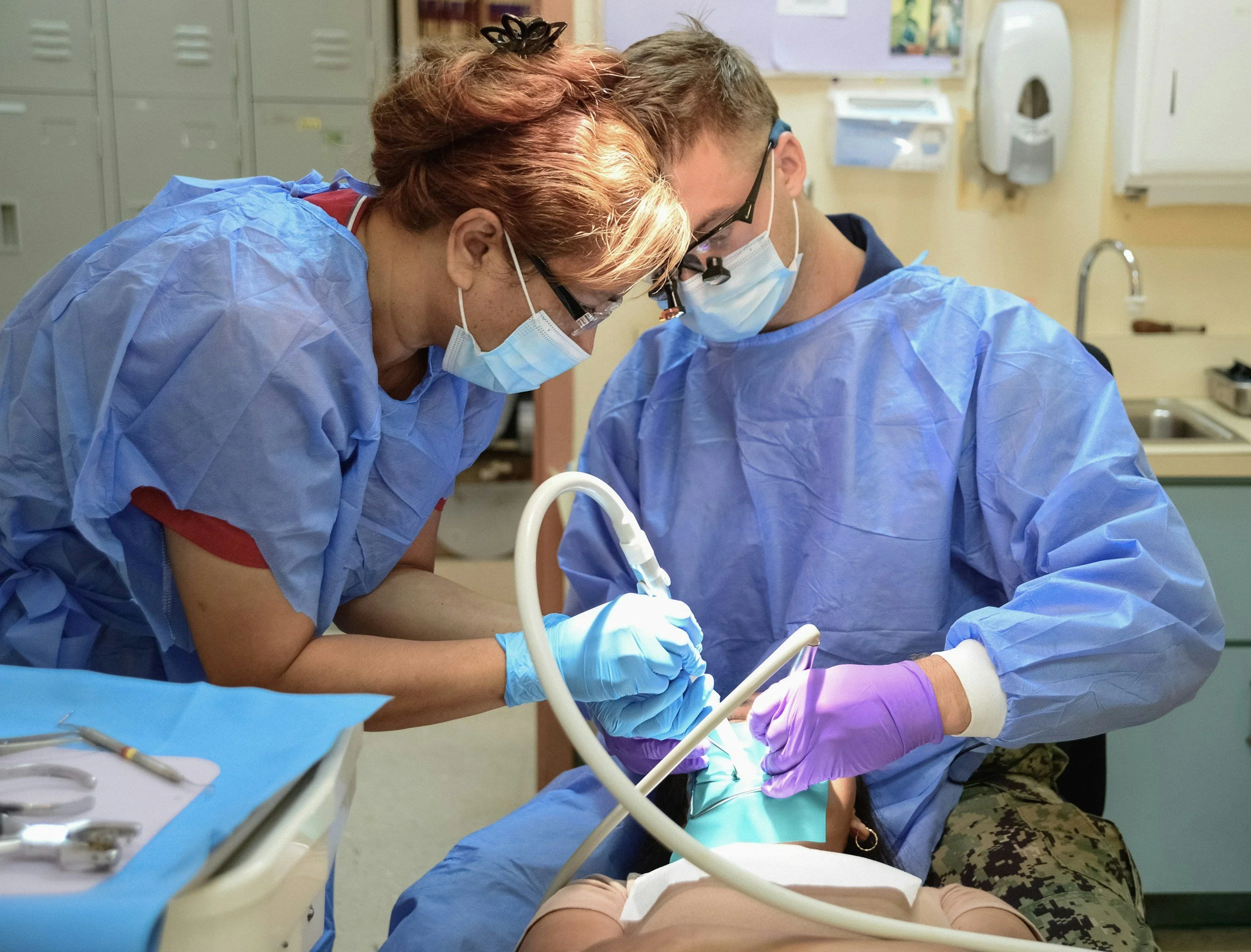
Managing the Anxious Dental Patient
Dental anxiety is not a single problem, and anxious patients do not all need the same response.
For one patient, the main concern may be pain or injections. For another, it may be loss of control, gagging, sensory overload, embarrassment, a previous traumatic experience or simply the anticipation of treatment.
Effective management therefore begins with understanding what is driving the anxiety for that individual patient.
This matters because anxiety can affect the whole clinical interaction. An anxious patient may need more reassurance, interrupt treatment, become hypervigilant or find it difficult to tolerate routine procedures. In turn, the clinician may feel increasingly pressured, particularly when time is limited or treatment becomes more difficult.
If the clinician becomes tense, hurried or frustrated, the patient may detect those cues and interpret them as further evidence of threat. Anxiety can then escalate on both sides.
Managing the anxious dental patient therefore involves more than reducing the patient’s fear. It also requires the clinician to remain regulated, communicate clearly and create a sense of predictability, control and safety.
Once the problem has been understood, the approach can be tailored accordingly. This may include better preparation, stop signals, increased patient control, rehearsal, attention regulation, imagery, breathing, self-hypnosis or clinical hypnosis.
The guiding principle is:
Technique follows formulation.
The aim is not simply to help someone endure one appointment, but to help them develop greater confidence and control in future dental care.
Clinical Hypnosis in Dentistry
Hypnosis has often been associated with trance, loss of control or a passive state created by the hypnotist. Contemporary research presents a more complex picture.
A widely used scientific definition describes hypnosis as involving focused attention, reduced awareness of competing stimuli and an increased capacity to respond to suggestion (Elkins et al., 2015). Importantly, this definition was deliberately designed not to commit hypnosis to any single theory of how it works.
Current research continues to debate the mechanisms underlying hypnotic responding. Social-cognitive accounts emphasise ordinary psychological processes such as expectation, attention, imagination, motivation, beliefs and the social context of suggestion, without requiring a unique hypnotic state. Other models examine changes in cognitive control, agency and brain-network activity. There remains no single agreed explanation for how hypnosis produces its effects (Montgomery et al., 2025).
What is clear is that hypnosis is not simply relaxation. Nor is the patient a passive recipient. Hypnotic suggestions invite changes in experience — for example in sensation, perception, movement, emotion or pain. In responsive individuals, those suggested effects may become subjectively convincing and sometimes feel relatively automatic.
Why is this relevant to dentistry?
Dentistry provides an unusually useful setting for hypnosis because treatment involves attention, expectation, sensation and emotion. Anxiety can heighten vigilance to bodily sensations; anticipated pain can influence the subsequent experience of pain; and fear of losing control can itself increase distress.
Clinical hypnosis provides a way of working deliberately with these processes while the patient remains involved, communicative and able to exercise choice.
The current dental evidence is encouraging but should not be overstated. A 2024 systematic review and meta-analysis found moderate-certainty evidence that hypnosis can reduce acute anxiety during oral surgery. A 2025 review of the dental hypnosis literature also found support for its use in areas including dental anxiety and acute dental pain, while emphasising that the evidence remains heterogeneous and further high-quality research is needed.
Hypnosis should therefore be understood as an adjunct to appropriate dental care, not a replacement for local anaesthesia, conscious sedation or clinical judgement.
Most importantly, there is no single “hypnosis technique” for every anxious patient. The patient who fears an injection may require a different approach from the patient whose difficulty is gagging, anticipated pain or loss of control.
Technique follows formulation.
Used appropriately, clinical hypnosis offers dentistry an evidence-informed way of working with the psychological processes that influence how patients anticipate, experience and respond to treatment..
The Psychological Demands of Dentistry
Dentistry demands far more than technical skill. It requires sustained concentration, precise motor control, rapid decision-making and the ability to manage patients who may be anxious, fearful or distressed — often within a tightly scheduled working day.
Clinicians are constantly processing several things at once: the procedure itself, the patient’s response, communication with the team, time pressures and clinical responsibility. This sustained attentional load can be mentally exhausting.
There is also an emotional demand. An anxious patient may be highly sensitive to the clinician’s tone, pace and body language. If the clinician becomes tense or hurried, that anxiety can become reciprocal. The ability to regulate one’s own response therefore matters not only for personal wellbeing, but for patient care.
The physical demands add another layer. Dentistry involves prolonged static posture, narrow visual focus, repetitive fine-motor work, noise and muscular tension. Physical and psychological strain are closely connected: stress can increase bodily tension, while prolonged physical tension can reinforce a sense of stress and fatigue.
Perhaps one of the greatest challenges is the lack of recovery time. A difficult appointment may finish and the next patient may already be waiting. The clinician is expected to reset immediately, often carrying residual tension from one encounter into the next.
Over time, this can become normalised. Tight shoulders, shallow breathing, irritability, mental fatigue or difficulty switching off may simply become part of the working day.
The answer is not simply to tell clinicians to become more resilient. It is to recognise the demands of the environment and develop practical ways to regulate attention, arousal and physical tension, recover more effectively and prevent one difficult encounter from shaping the next.
The Dental Head Space starts from a simple principle: supporting the wellbeing of the clinician is not separate from good patient care. It is part of it.

Training and Resources
The Dental Head Space provides education and practical resources for dental professionals who want to develop greater confidence in managing clinical pressure, anxious patients and the psychological aspects of dental care.
Training
Training is designed specifically for the dental environment and combines contemporary psychological knowledge with practical clinical application.
Topics include:
clinician self-regulation and managing pressure during the working day
understanding the psychological demands of dental practice
recognising and managing dental anxiety, fear and phobia
communication with anxious and distressed patients
assessment and formulation before choosing an intervention
evidence-based clinical hypnosis and hypnotic communication in dentistry
using attention, expectation, imagination and suggestion therapeutically
integrating psychological approaches with routine dental care and, where appropriate, conscious sedation
Training can be delivered through practice-based sessions, workshops, webinars and structured professional education. The emphasis is always on skills that can be translated into everyday clinical practice rather than theory alone.
Resources
The resource library is designed to give dental professionals practical material they can return to when needed.
Resources will include:
brief clinician reset exercises for use between patients
mind–body regulation techniques
guidance for managing difficult or emotionally demanding appointments
practical approaches to anxious-patient communication
patient preparation and rehearsal strategies
self-hypnosis exercises
downloadable guides and clinical prompts
educational articles on stress, anxiety, hypnosis and clinician wellbeing
audio and video resources for both clinicians and patients
The aim is to make evidence-informed psychological skills accessible, clinically relevant and realistic within a busy dental working day.
Whether used for personal development, team learning or patient care, the focus remains the same: helping dental professionals understand the psychological processes at work and develop practical ways of responding to them more effectively.

If you would like to discuss individual support, team training, dental hypnosis education, workshops, webinars, speaking or professional collaboration, please get in touch.
Enquiries are welcome from:
dental professionals seeking individual support
practices interested in team wellbeing or in-house training
clinicians wanting to develop skills in managing anxious patients
organisations looking for workshops, webinars or conference speakers
professionals interested in clinical hypnosis in dentistry
researchers or educators interested in collaboration
Please use the contact form below and include a brief outline of what you are looking for.
I will respond personally and, where appropriate, arrange an initial conversation to discuss your needs.
The Dental Head Space
Supporting the psychological wellbeing of dental professionals and the care of anxious patients.
Contact
Please use the contact form below, or contact me directly:
Email: lebromage@hotmail.com
Telephone: 07738285158
Website: The Dental Head Space
For training, speaking or professional enquiries, please include a brief outline of what you are looking for.